
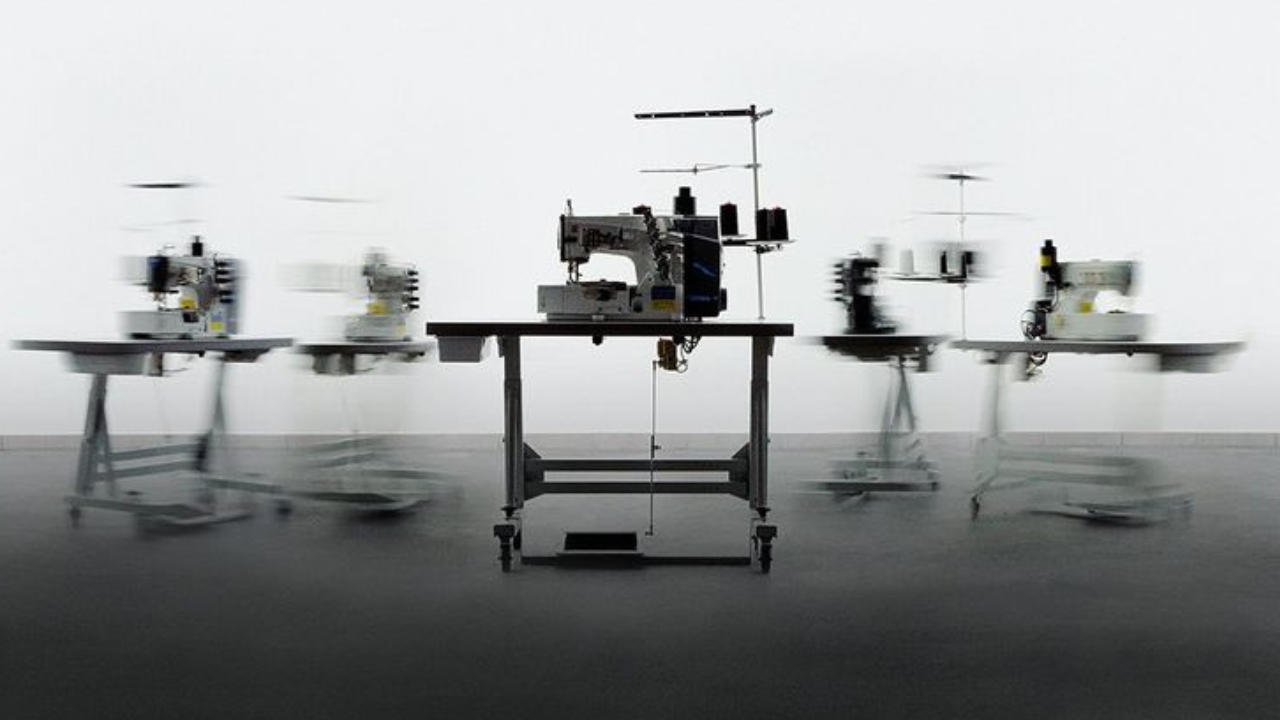

Technology is required to push the fashion industry further. The marriage of the two industries is something that has been present throughout their shared history, a union of inequality imperfect by design. Even so, when one excels the other benefits. Technology is an industry based on the reality of the current world: relentless and unforgiving, bulldozing anyone in its path for the sake of advancement. Fashion exists on the opposite end of the spectrum. It produces artists, relies on imagination, and the practicality of what can be achieved. The business side may be rough, but fashion revolves around a sense of the unknown– a dream being sold to everyone it touches. As the marriage evolves, fashion relies on this partnership for resources, but what happens if society reaches a point where the tech system needs to be rerouted? Will fashion stand up, or fall in line out of fear of being left behind?
The Beginning of the Union

The cottage industry was a system used in fashion to create the early iterations of the manufacturing industry. Merchants would purchase and cut fabrics, then outsource them to women in the area to hand-sew garments. Hand sewing was a rigorous task that involved many hours of labor. Families who could afford it purchased finished garments from merchants or tailors. Those in poverty, however, relied on women in the household to sew their clothing by hand.- Elias Howe, humbled by poverty, watched his wife hand-sew their clothing and wanted to create a solution to a problem present in many homes– creating a fortune for himself in the process. In 1845, he created the first working overlock machine. This invention paved the way for Isaac Singer to create the first domestic sewing machine.
The technology within Singer’s machine opened the gateway to the fashion industry. Women had access to a faster, less physically demanding way to create clothing. Beyond its practicality, the invention simultaneously sparked a new universe in fashion. Sewing became something closer to joy than labor. New techniques formed, and home sewing patterns emerged to fill a void of knowledge. This blissful honeymoon phase was a critical moment that fused the two industries– the beginning of fashion made for consumption rather than necessity
The Cost of Reality
Imagine technology and fashion at their 200th anniversary– celebrating their union, speeches detailing how their love changed the world for each. But beneath the ceremony, the tremulous partnership union was starting to show cracks in its foundation. The Technology Revolution, or the Second Industrial Revolution, turned merchants into brands and granted them the capability for mass production. Mass production accelerated a countless number of elements within the fashion industry.
Fashion turned into style. Customers had access to standardized sizing through local department stores that could sell clothing to the masses–clothing that wasn’t tailored to a single person. This helped brands introduce seasonal fashion. With shorter production timelines, more clothing could be made. The ready- to- wear industry was established and solidified as the new standard in American Fashion. Magazines had more content to cover through ads and style features. From ready-to- wear, the fashion consumer was officially formed because it granted access, at a low entry fee. Even if the average civilian couldn’t afford every piece, extreme wealth was no longer a prerequisite. The dream was insight.
Technology had given fashion a new purpose and a new resource, but everything comes at a price. As innovative as these new avenues were, they took from the fashion industry. Injustice on the shoulders of the laborers was the cost of the growth. As factories began to be the main source of income, seamstresses were treated as cheap labor in harsh environments. The “sweatshop” sigma was created in this era. Some workers were required to work 14-16-hour days without a lunch break. Machines went unregulated, so injuries and accidents were common. Factory owners exploited children. The hardships that those laborers faced ultimately resulted in labor laws being passed and unions being formed. Employees of the fashion industry took matters into their own hands, went on strike, and changed their conditions.
This dark side of technology wasn’t unknown to the fashion leaders, but the growth and profits it offered were more important. An industry based on outward appeal couldn’t afford to get left behind.

What was the sacrifice of the internet?
Digital fashion is a technology-driven sector that only exists because of the internet. In 1993, the Internet was released to the public. It was a slow start, but by 2005, Cyber Monday was created, and the online shopping world developed. Customers were shopping differently, which meant the industry had to play catch-up. Brands entered their e-commerce stage, offering their inventory online. The pleasure of consuming fashion reached a new height. For the first time, people were able to connect over their love for brands and designers through blogs. It was a playground for everyone.
But as the saying goes, “adapt or die.” Tech had once again created something new– an innovation that offered convenience, but what sectors did fashion have to sacrifice for the adaptation? Direct mail and catalogs were replaced with online shopping. Brick-and-mortars were left to die, while e-commerce received the latest products and resources. Magazines began to dwindle as readers had everything at their fingertips. This evolution of fashion was a product of its marriage to tech. But what is evolution when it requires sacrificing the soul?
Currently, the tech oligarchy is utilizing its marriage with fashion to build a celebrity around itself–all while hiding its intentions. Mass production is back to exploiting its workers, but instead of pushing back, the industry has chosen to deepen the union. Vogue recently had Jeff Bezos as the sponsor of the Met Gala. A relationship that speaks to the individual rather than the brand. The Met Gala coverage became about how his wife is a “fashion influencer” instead of the protests that happened outside. A willful avoidance of society, but instead profits. The fashion industry has yet to confront how its compliance only hinders its own long-term success. Prosperity will always come after allegiance to the people.
Within the last decade, tech has taken from the fashion labor force. Through AI, jobs have been lost, and the slow creep of using artificial intelligence into the creative world cannot be read as anything but sinister. When will the industry have enough of this union? Or will the fate of fashion always be tied to the tech giants waving dollars in its face?
Written by Corinea Austin